


Synthetic Shame: Deepfakes, AI Nudes and the POSH Problem Employers Are Not Ready For
1. Why synthetic sexual content belongs in the POSH conversation 2. Weather workplace have moved beyond office premises? How does this affects…

eLearnPOSH
Best training on POSH
Introduction: The Dangerous Misreading of Ordinary Warmth
The Core Mistake: Confusing Social Access With Sexual Consent
What the POSH Law Actually Looks At: Unwelcome Conduct
Why Women Often Stay Polite Even When They Are Uncomfortable
Power Changes the Meaning of “Friendly”
The Problem With “She Never Said No”
Digital Friendliness: The New Grey Zone That Should Not Be Grey
From Misreading Interest to Damaging Workplace Culture
What Organisations Must Do Differently
What Individuals Must Do Differently
What Internal Committees Should Watch For
Building a Culture Where Warmth Is Safe
 “She was friendly with me.”
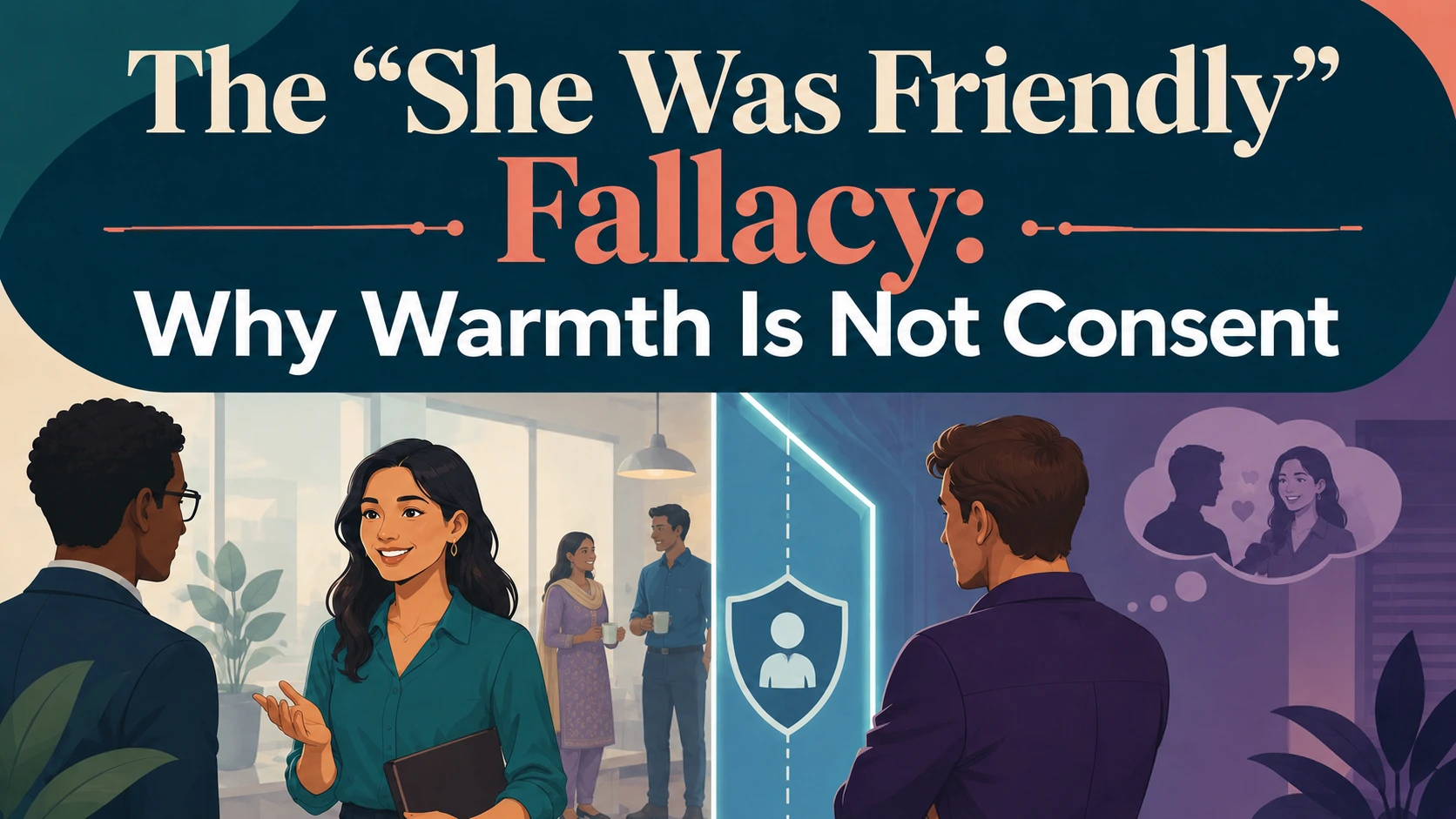
This sentence may sound casual, but in workplace harassment conversations, it can become deeply dangerous. It is often used to explain away inappropriate comments, unwanted messages, repeated personal attention, physical closeness, or boundary-crossing behaviour. The implication is simple: because a woman smiled, laughed, replied, helped, cooperated, or behaved warmly, she somehow created permission.
That assumption is the “she was friendly” fallacy.
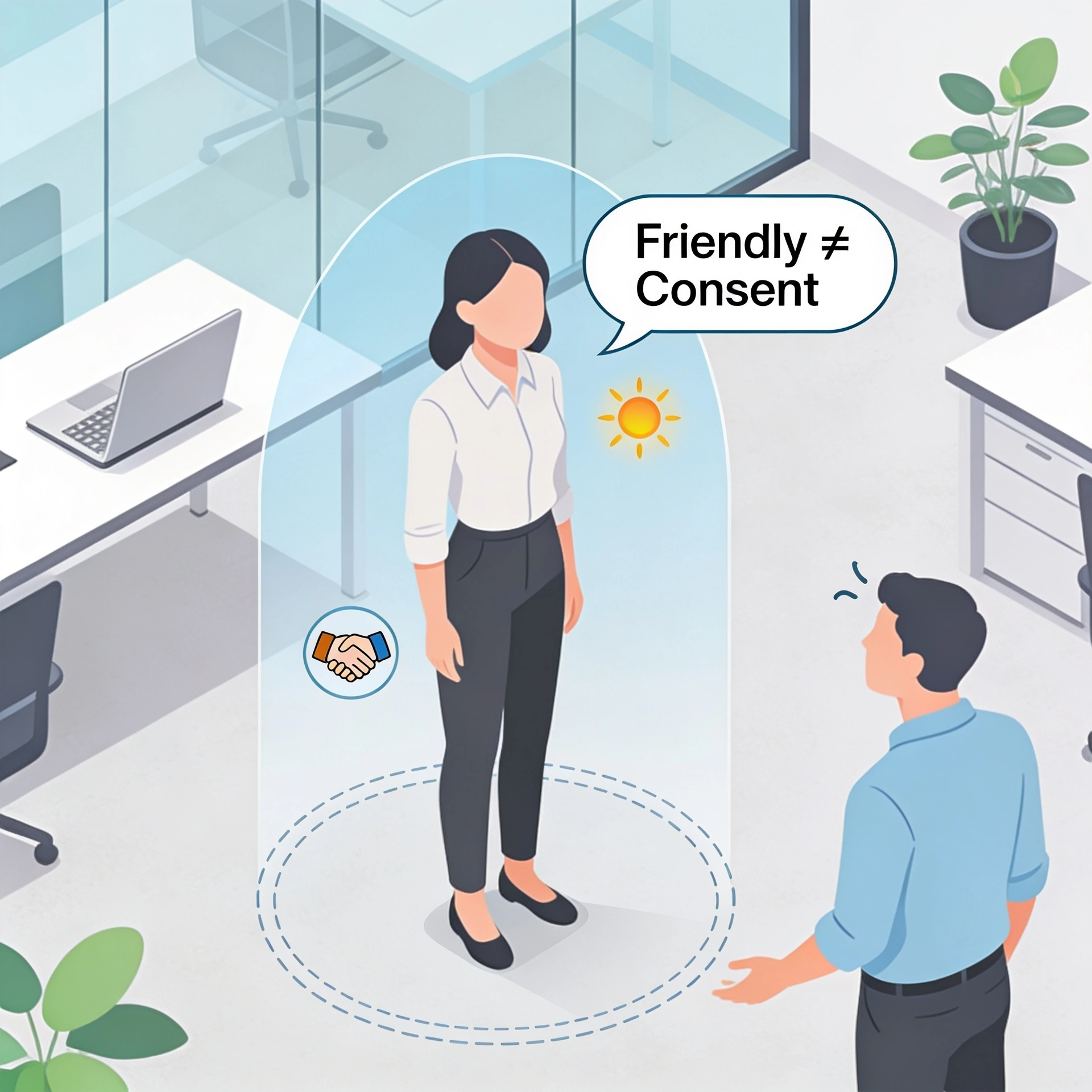
It is the mistaken belief that warmth equals willingness, politeness equals permission, and professional comfort equals personal or sexual interest. In reality, friendliness is one of the most ordinary parts of workplace life. People are expected to collaborate, speak respectfully, build rapport, manage clients, support colleagues, and maintain a pleasant environment. None of these behaviours gives another person the right to sexualise the interaction.
The problem is not friendliness itself, but the entitlement that reads permission into it. A woman’s warmth should not become evidence against her, and a healthy workplace must let people be kind, cooperative, and approachable without that kindness being converted into consent.
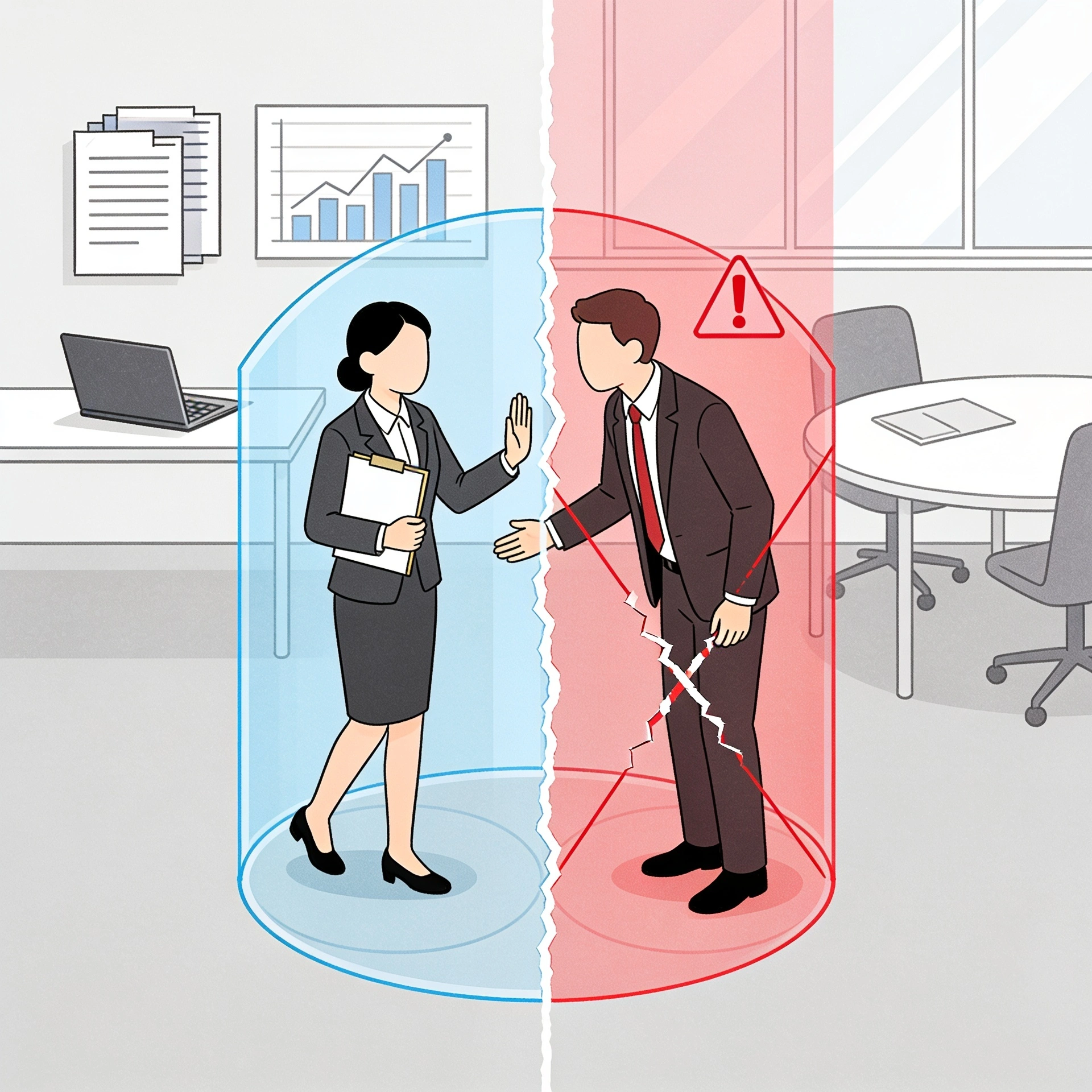
The “she was friendly” fallacy begins with one basic confusion: social access is mistaken for sexual consent.
Allowing a conversation is not the same as inviting flirtation. Being comfortable discussing work signals no welcome for personal remarks. Laughing in a group is not a request for private attention. And being approachable says nothing about being available.
UN Women, in its explainer “When it comes to consent, there are no blurred lines,” explains that consent must be active, freely given, informed, specific, and reversible. It also makes clear that silence, uncertainty, pressure, or the absence of a clear “no” cannot be treated as consent. This is crucial in workplace settings because many employees continue to behave politely even when they are uncomfortable.
Consent is not a mood, a tone, a facial expression, or a pattern of polite communication. It is a clear and voluntary agreement to a specific act. A colleague agreeing to discuss a project is not agreeing to personal comments. A teammate replying to a message is not agreeing to flirtation. A woman laughing at a neutral joke is not agreeing to sexual attention.
Indian law does not treat friendliness as consent. The Sexual Harassment of Women at Workplace (Prevention, Prohibition and Redressal) Act, 2013, commonly known as the POSH Act, defines sexual harassment through unwelcome acts or behaviour. These include physical contact and advances, demands or requests for sexual favours, sexually coloured remarks, showing pornography, and any other unwelcome physical, verbal, or non-verbal conduct of a sexual nature.
The key word is unwelcome.
The POSH Act does not ask whether the respondent thought the complainant was friendly. It does not ask whether the complainant had smiled earlier, replied earlier, or behaved cordially earlier. The legal question is whether the conduct complained of was welcome or unwelcome in that context.
The Ministry of Women and Child Development, in its Handbook on Sexual Harassment of Women at Workplace, explains that sexual harassment affects a woman’s dignity, equality, health, safety, and ability to participate in work. This framing is important because it moves the issue away from personal misunderstanding and places it where it belongs: within workplace rights, safety, and dignity.
So, in a POSH context, prior friendliness is not a permanent licence. A woman can be friendly on Monday and uncomfortable on Tuesday. She can enjoy a professional conversation and reject a sexual remark. She can accept work-related support and refuse personal pursuit.

A major reason this fallacy survives is that people assume discomfort will always be obvious. They imagine that if conduct is unwelcome, the woman will immediately object, raise her voice, leave the room, block the person, or file a complaint. Real workplaces do not work that way.
Many people manage discomfort quietly. A woman may laugh nervously because she does not want to create a scene. She may change the subject because direct confrontation feels risky. She may continue replying because the person is senior, influential, or connected to her work. She may stay cordial because she fears being called rude, dramatic, arrogant, or “difficult.”
The Ministry of Women and Child Development’s POSH Handbook recognises that workplace sexual harassment can affect a woman’s physical and emotional well-being, as well as her work environment. This helps explain why a complainant’s calm or polite behaviour after an incident should not automatically be treated as proof that nothing happened.
Politeness after discomfort may be a survival strategy. It may be an attempt to de-escalate. It may be the safest available response in that moment. Treating it as consent misunderstands how people often respond to pressure, embarrassment, fear, or shock.
Power imbalance makes consent more complex because the person with less power may not feel free to refuse directly. A junior employee may remain polite with a manager because her appraisal, projects, reputation, or growth opportunities may be affected. A trainee may smile at a senior leader out of respect. An employee may respond carefully to a client because the business relationship matters.
The POSH Act places a duty on employers to provide a safe working environment and create mechanisms for prevention and redressal. This is important because workplace harassment often occurs within structures of hierarchy, dependence, evaluation, and professional risk. In such situations, friendliness may reflect caution, professionalism, or fear of consequences rather than genuine comfort.
To address this, organisations should adopt clear safeguards:
 Set a higher boundary standard for people in power: Managers, senior employees, trainers, clients, vendors, and team leads should proactively maintain professional boundaries avoiding personal comments, repeated private invitations, and unnecessary late-night messages rather than leaving a junior person in the position of having to reject them.
“She never said no” is not proof of consent. It is often proof of a poor understanding of consent.
UN Women’s consent guidance directly challenges the idea that the absence of refusal equals agreement. Its explainer on consent states that consent cannot be assumed from silence, passivity, or lack of resistance. This principle is especially important at work, where people may avoid direct refusal because they fear professional consequences.
In workplace settings, many employees do not reject uncomfortable behaviour in dramatic language. Instead, they create distance in quieter ways: turning formal, replying less, sidestepping one-on-one situations, changing the subject, or letting their responses go cold.
A respectful colleague does not keep pushing until the other person produces a perfect rejection. A mature workplace culture teaches people to notice hesitation, withdrawal, short replies, avoidance, discomfort, and formality. These are signals to stop, not invitations to try harder.
Digital workplace communication has created a new boundary problem. WhatsApp, Teams, Slack, email, LinkedIn, and Instagram are often treated as extensions of work, but they also enter spaces that were once private: evenings, weekends, bedrooms, family time, travel time, and rest time.
In many Indian workplaces, not replying after office hours is still treated as a lack of dedication. Employees may fear that if they do not answer a manager’s late-night message, they will be seen as unavailable, slow, arrogant, or not serious about growth. This culture of constant responsiveness is especially difficult for junior employees, women employees, interns, trainees, and contractual workers because they may feel they have to prove commitment through availability.
This is where digital friendliness becomes complicated. A woman may reply late at night because she is trying to protect her professional image, not because she welcomes personal access. She may use polite language because the sender is senior. She may continue a chat because ignoring it may affect work allocation, appraisal, or team perception. In such cases, a response should not be treated as comfort. It may be a response to workplace pressure.

The debate around the right to disconnect is relevant here. The Economic Times, reporting on the Right to Disconnect Bill, 2025 a private member’s bill introduced in the Lok Sabha explained that it proposes to give employees the legal right to ignore work-related calls and emails after office hours or on holidays. India does not yet have an enacted central right-to-disconnect law, and private member’s bills rarely become law, but the very introduction of such a Bill reflects a growing recognition that employees should not be professionally punished for protecting their personal time.In its 2025 ruling in Dr. Amit Kumar v. University of Delhi, the Delhi High Court considered allegations involving WhatsApp and Facebook messages sent by a professor to students and affirmed that virtual interactions arising from a professional or academic relationship can fall within the scope of workplace misconduct under the POSH framework. The Court’s approach is important because it recognises that the workplace can extend into digital spaces when the relationship itself comes from work, authority, or institutional access.
The problem, therefore, is not only the message. It is the ecosystem around the message. A late-night “work query” can become a personal conversation. A personal conversation can become repeated compliments. Repeated compliments can become pressure to meet privately. If the recipient keeps replying because she fears seeming unprofessional, her replies should not be converted into consent.
Organisations need clear digital boundary rules, not vague expectations of “use your judgment.” Practical safeguards should include:
Digital communication should make work easier, not make employees permanently accessible. A workplace that equates silence with laziness and instant replies with loyalty creates the perfect environment for boundary violations. The aim is a culture where employees can disconnect without fear, communicate without being sexualised, and set digital boundaries without being labelled uncommitted.
The “she was friendly” fallacy often begins as a personal assumption, but it does not remain personal for long. When one person treats warmth as attraction, politeness as encouragement, or sociability as consent, the immediate harm may fall on one woman. But when the workplace accepts that explanation, the damage spreads into the culture itself.
 Research on sexual misperception has examined how friendliness, warmth, or sociability can sometimes be interpreted as sexual interest, particularly in cross-gender interactions. For example, studies published in Archives of Sexual Behavior have examined sexual overperception, where a person perceives sexual interest where none may have been intended. This research is useful because it explains why assumptions can happen, but it does not excuse acting on them.
That distinction is important. A person may misread a smile, a laugh, a quick reply, or an easy conversation. But a workplace cannot allow private assumptions to become the standard for acceptable conduct. Misreading interest is not a defence to boundary-crossing behaviour. It is a warning sign that employees need clearer rules, better training, and stronger respect for consent.
The real problem begins when these assumptions are normalised. If a woman’s friendliness is later used against her, other women notice. They may become guarded in meetings, avoid informal conversations, reduce mentoring, decline networking opportunities, stop attending office gatherings, or keep communication unnecessarily formal. Over time, this affects collaboration, inclusion, trust, leadership development, and psychological safety.
The International Labour Organization, in the Violence and Harassment Convention, 2019, recognises violence and harassment in the world of work as a range of unacceptable behaviours and practices that may result in physical, psychological, sexual, or economic harm. This broader understanding is important because workplace harassment is not limited to one offensive message or one inappropriate comment. It also includes the climate created when people feel they must constantly monitor how their ordinary warmth may be interpreted.
A healthy workplace does not require women to dial down their warmth to avoid being misread. It requires everyone else to accept that attraction cannot be presumed, consent cannot be guessed, and professional friendliness must never be weaponised.
Organisations must stop treating consent and boundaries as “common sense.” If common sense were enough, the “she was friendly” excuse would not appear so often. Three commitments matter most.
First, POSH training must include real workplace scenarios, not only legal definitions. Employees should be asked to examine situations such as late-night messaging, appearance-based compliments, repeated coffee invitations, “jokes” with sexual undertones, senior-junior personal attention, and post-event informal conversations. The goal should be to teach judgment, not just compliance.
Second, policies must clearly state that friendliness, silence, delayed reporting, prior cordiality, or continued professional communication do not automatically imply consent. This one sentence can prevent a great deal of confusion in complaint handling.
Third, organisations must back this up with the structures the POSH Act already requires—an Internal Committee, regular awareness programmes, and working mechanisms for redressal—and treat them as the foundation of workplace trust rather than as paperwork.
For individuals, the rule is simple: do not convert warmth into permission.
If a colleague is friendly, receive it as friendliness. Do not escalate to personal comments unless the context clearly supports it. Do not test boundaries through suggestive jokes. Do not repeatedly ask for private meetings after hesitation. Do not send personal messages late at night and then claim innocence because the person replied once.
If you are unsure whether attention is welcome, step back. Professional caution is not cowardice. It is maturity.
If someone says no, stop. If someone looks uncomfortable, stop. If someone becomes formal, stop. If replies become shorter, stop. If the person avoids being alone with you, stop. If the only reason you think there is interest is that she is “nice,” stop.
Respect does not require a legal notice. It requires basic awareness.
Internal Committees should be especially alert to the misuse of friendliness as a defence. The presence of friendly interaction should be treated as one fact among many, not as a decisive answer.
Friendly interaction, polite replies, emojis, or continued contact should never be treated as conclusive evidence of consent. Committees should read such material in context—examining hierarchy, the timing and frequency of messages, whether the communication was work-related, whether the conduct continued after discomfort was shown, and whether the complainant realistically had the freedom to disengage.
Committees should ask whether the alleged behaviour was connected to sex, gender, or unwanted personal attention. They should examine whether the complainant’s conduct can reasonably be explained by workplace pressure, hierarchy, fear, or professional necessity. They should also look for patterns: repeated messaging, escalation, private invitations, comments on appearance, attempts to isolate, retaliation after refusal, or reputational attacks after a complaint.
Most importantly, committees must avoid expecting the “perfect victim.” A person who experienced harassment may still have smiled, replied, attended meetings, completed work, or behaved professionally. That does not make the complaint false. It may simply mean she was trying to survive the workplace while deciding what to do.
The real goal is not to make workplaces cold. It is to make warmth safe.
People should be able to smile without being sexualised. They should be able to collaborate without being pursued. They should be able to be kind without being accused of “leading someone on.” They should be able to maintain professional relationships without surrendering personal boundaries.
That kind of safety is built by the people around her, through the restraint they show and the assumptions they refuse to make.
That responsibility begins with a basic shift: stop treating women’s behaviour as a puzzle to decode and start treating consent as something that must be clearly, freely, and specifically given.
1. Why synthetic sexual content belongs in the POSH conversation 2. Weather workplace have moved beyond office premises? How does this affects…
1. What Triggered the Karnataka POSH Crackdown? 2. The Legal Position Was Always Clear 3. The Gap Between Compliance and Functioning…

1. The Shift from POSH Compliance to Real Workplace Effectiveness 2. How SHe-Box Is Changing Workplace Harassment Reporting in India 3. Understanding…
1. First Principle: A POSH Complaint Is an Allegation, Not a Verdict 2. Can an Employee be Terminated Mid-Inquiry? 3. What…
Leave a Reply