


The “She Was Friendly” Fallacy: Why Warmth Is Not Consent
Introduction: The Dangerous Misreading of Ordinary Warmth The Core Mistake: Confusing Social Access With Sexual Consent What the POSH Law Actually Looks…

eLearnPOSH
Best training on POSH
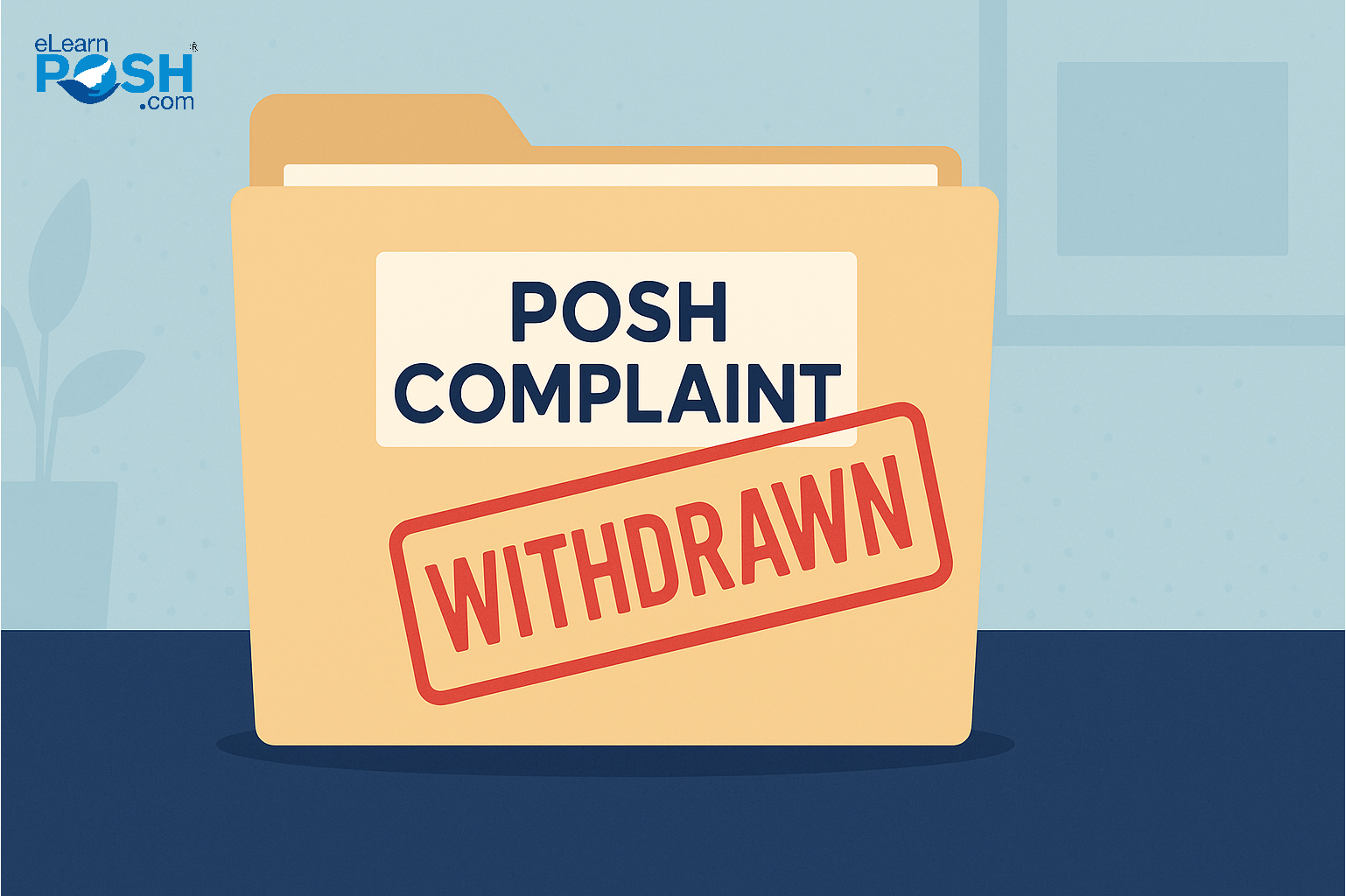
Reporting workplace sexual harassment is never an easy decision. For many women, hesitation stems from a lack of trust
in the redressal process, fear of losing career opportunities, social stigma associated with the sexual harassment or
retaliation. While some may choose to remain silent, change jobs, or resign quietly, others find the strength to
initiate a formal complaint.
However, after filing a complaint, some complainants may wish to withdraw it due to factors such as retaliation,
pressure, coercion, or the emotional strain of the inquiry process. There are also instances where complaints are filed
with an ulterior motive, such as to damage the respondent’s reputation or to gain a personal advantage. Once that
objective is achieved, the complainant may seek to discontinue the proceedings, sometimes during conciliation or even
after the inquiry has started.
This raises a complex question for Internal Committees and organisations: Can a POSH complaint be withdrawn after it is
filed? If so, does the Internal Committee have the discretion to accept such a request?
This blog explores the legal perspectives on withdrawal and outlines how Internal Committees may respond in such
situations. It represents eLearnPOSH’s general opinion. For specific matters, a detailed review of the facts is
essential, and we recommend seeking advice from qualified legal professionals.
Both the Sexual Harassment of Women at Workplace (Prevention, Prohibition and Redressal) Act (POSH Act) and the POSH Rules, 2013 are silent on the subject of withdrawal. There is no express provision in the Act that either permits or
prohibits a complainant from withdrawing a complaint once filed. Similarly, there is no clear provision granting the
Internal Committee discretionary power to accept or reject a withdrawal request.
Although the law does not refer to “withdrawal,” it does allow the complainant to explore conciliation as an alternative
mechanism to withdrawal, as a possible resolution before the inquiry begins.
Unlike criminal cases, where withdrawing a complaint after the trial has started is generally not allowed, in civil
cases parties can withdraw at any stage before the final judgment or decree. Since the POSH Act is a civil law,
eLearnPOSH recommends that the same principle can be applied, meaning a complainant may withdraw her complaint even after the inquiry has begun.
In some situations, a complainant may face serious threats to her safety or that of her family, or risk being
blacklisted from future employment. Forcing her to continue despite a voluntary withdrawal request could infringe on her
rights and put her in unnecessary danger.
While IC can take few steps to convince the Complainant, they cannot force her
to continue with the inquiry process. Continuing the inquiry without her participation may also violate the principles
of natural justice, as the respondent would lose the opportunity to cross examine her. This absence could further
strengthen the respondent’s defence.
If the complainant wishes to withdraw her complaint, the Internal Committee (IC) should first try to understand the
reasons, offer necessary support, and address any concerns such as coercion or intimidation. However, the IC cannot
compel her to continue. Once a withdrawal request is made, the IC also has no jurisdiction under the POSH Act to
initiate or continue a suo moto inquiry.
1. If the inquiry is already complete – If the inquiry has been completed, meaning the examination and cross examination of
witnesses are finished and all documentary evidence has been presented, a withdrawal request will not change the
outcome. The IC should proceed to prepare its inquiry report based on the evidence already on record.
2. If it is a false or malicious complaint – If the complainant withdraws the complaint and the Internal Committee (IC),
based on the evidence recorded so far before the withdrawal, is of the view that the complaint is malicious, can record
its reasoning and make recommendations as per Section 14 of the POSH Act.
3. If withdrawal is due to coercion or retaliation – If the IC suspects that the withdrawal is linked to coercion, threats,
or retaliation, it should:
Introduction: The Dangerous Misreading of Ordinary Warmth The Core Mistake: Confusing Social Access With Sexual Consent What the POSH Law Actually Looks…

1. Why synthetic sexual content belongs in the POSH conversation 2. Weather workplace have moved beyond office premises? How does this affects…
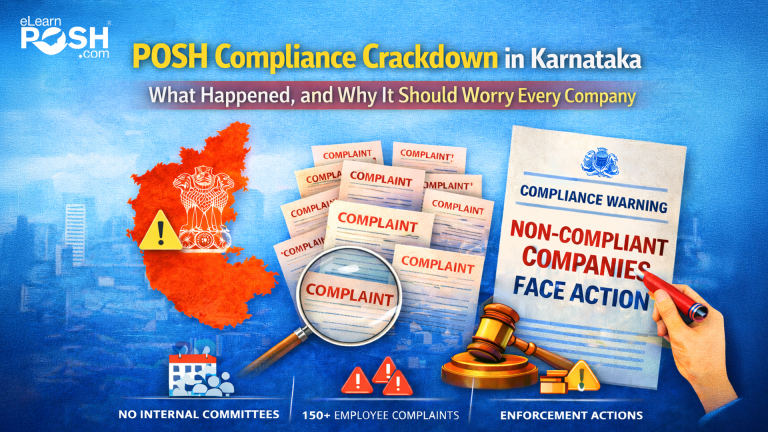
1. What Triggered the Karnataka POSH Crackdown? 2. The Legal Position Was Always Clear 3. The Gap Between Compliance and Functioning…

1. The Shift from POSH Compliance to Real Workplace Effectiveness 2. How SHe-Box Is Changing Workplace Harassment Reporting in India 3. Understanding…
Leave a Reply