


The “She Was Friendly” Fallacy: Why Warmth Is Not Consent
Introduction: The Dangerous Misreading of Ordinary Warmth The Core Mistake: Confusing Social Access With Sexual Consent What the POSH Law Actually Looks…

eLearnPOSH
Best training on POSH
 Introduction
The Prevention of Sexual Harassment (POSH) Act, 2013 is pivotal in India’s legal framework, safeguarding women against sexual harassment at the workplace and ensuring justice. An essential aspect of this Act is the determination of punishment post-inquiry, which is crucial for maintaining workplace integrity and justice. This blog aims to dissect the complexities involved in deciding appropriate punishments under the POSH Act. We will look at the types of punishments, the principle of proportionality, decision-making processes, and best practices for fair and effective implementation.
Doctrine of proportionality is a principle often applied in law and governance. It serves as a means to ensure that the measures taken by authorities or the penalties imposed are not excessive, arbitrary, or unreasonable in relation to the objective they seek to achieve. In sexual harassment at workplace cases, this doctrine mandates that any punitive action recommended by the IC or Local Committee (LC) must correspond appropriately to the severity of the offense, considering the nature of the act, its impact on the victim, and any past misconduct by the accused. It aims to balance the rights and dignity of the victim with the rights of the accused, ensuring that the punishment serves the dual purpose of rectifying harm and deterring future misconduct without being unduly harsh. In doing so, it upholds ethical and legal standards, maintains consistency in organizational disciplinary actions, and reinforces the commitment to a safe working environment. Thus, the doctrine of proportionality is a fundamental aspect of the POSH Act’s framework, guiding the determination of just and appropriate punishments to create respectful and harassment-free workplaces.
One of the key elements of the POSH Law empowers the Internal Committee (IC) to recommend various types of punishments to the employer, depending upon the severity and circumstances of the case. Here are the key punishments under the POSH Law:
When it comes to determining the appropriate punishment under the POSH Act, 2013, after an instance of sexual harassment has been confirmed, several critical criteria are taken into consideration to ensure fairness, justice, and effectiveness. These criteria are designed to assess the gravity of the situation and ensure that the punishment is proportionate to the offense. Here is an overview of the primary factors involved:
By carefully considering these criteria, organizations can ensure that the punishment for sexual harassment under the POSH Act is fair, just, and appropriate. It allows for a nuanced approach that not only addresses the specific incident but also contributes to the broader goal of maintaining a safe, respectful, and dignified workplace environment.
The mechanism for determining punishment in sexual harassment cases varies significantly based on the organizational structure and the existing policy framework. The distinction primarily lies between organizations that adhere to formal service rules and those that follow their own POSH policies.
In organizations bound by the service rules, the role of the IC is focused on investigating the complaint and establishing whether the accused is guilty of sexual harassment. Once the IC concludes its inquiry and states that guilt of the accused, the responsibility of deciding the punishment shifts to the disciplinary authority within the organization.
The disciplinary authority reviews the findings and recommendations of the IC and then determines the appropriate punishment as per the organization’s service rules. The service rules typically outline a range of disciplinary actions and procedures to be followed, ensuring that the punishment is consistent with the organization’s established policies and is proportionate to the nature of offense. Upon determining the appropriate punishment, the disciplinary authority will ensure that it is specifically and solely implemented with respect to the offender.
For organizations that do not have formal service rules but have their own POSH Policies, the process is somewhat different. In these scenarios, the IC not only determines the guilt of the accused but also has the authority to recommend specific punishments based on the severity of the case.
Upon the completion of the inquiry, the IC forwards its recommendations regarding the punishment directly to the employer. It is then the employer’s responsibility to implement these recommendations. The recommendations made by the IC can include a range of punitive measures such as warnings, mandatory counselling, suspension, or even termination, depending on the gravity of the sexual misconduct. Once the IC has made its recommendation for punishment to the employer, it becomes the employer’s responsibility to enact the recommended punishments.
In adjudicating punishments under the POSH Act, it is imperative not only to consider what actions to undertake but also to be cognizant of elements that must be avoided. These pitfalls, if not addressed, can significantly undermine the equity and efficacy of the decision-making process.
In cases where conciliation is chosen as the preferred mode of redressal, it is important to note that severe punishments are not permissible following the conciliation process. Conciliation is a method aimed at resolving the issue amicably between the parties involved, without necessitating a formal inquiry or the imposition of harsh penalties. This approach is based on mutual agreement and the voluntary resolution of the complaint. Therefore, once a conciliation agreement is reached and accepted by both parties, he imposition of severe disciplinary actions, such as termination or suspension, is not an option. This underscores the important of understanding the implications of choosing conciliation as a resolution method under the POSH Act, emphasizing its nature as a remedial rather than punitive process.
The determination of punishment in POSH cases under the POSH Act, 2013, is a crucial and delicate process. It demands a fair and balanced approach, ensuring that the punishment is proportionate to the offense and mindful of the impact on all involved parties. Organizations must navigate this process with a clear understanding of their responsibilities, whether it’s implementing recommendations from the IC or following their own POSH policies. The ultimate goal is to uphold justice, support a safe working environment, and foster a culture of respect and dignity. This commitment to a fair and effective redressal mechanism is essential in the fight against workplace sexual harassment.
For more updates on POSH, kindly follow our LinkedIn page.
To book a personalized demo call directly with the Subject Matter Expert, you can write to sales@succeedtech.com
Introduction: The Dangerous Misreading of Ordinary Warmth The Core Mistake: Confusing Social Access With Sexual Consent What the POSH Law Actually Looks…

1. Why synthetic sexual content belongs in the POSH conversation 2. Weather workplace have moved beyond office premises? How does this affects…
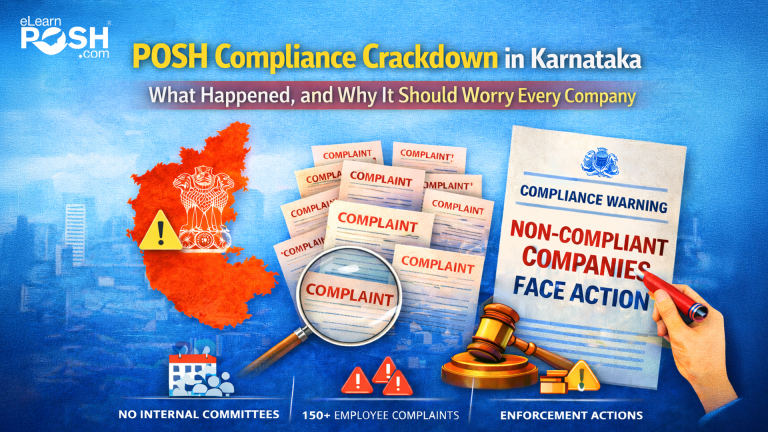
1. What Triggered the Karnataka POSH Crackdown? 2. The Legal Position Was Always Clear 3. The Gap Between Compliance and Functioning…

1. The Shift from POSH Compliance to Real Workplace Effectiveness 2. How SHe-Box Is Changing Workplace Harassment Reporting in India 3. Understanding…
Leave a Reply