




Editorial

Ms. Maya Sreenivasan
Psychologist,
Subject Matter Expert at eLearnPOSH.com
 Retaliation Prevention Must Begin on Day One
A POSH complaint does not end with receiving the complaint or starting the inquiry. In many cases, the most sensitive phase begins immediately after a concern is raised.
This is the stage where retaliation, intimidation, gossip, exclusion, subtle pressure, or premature judgment can quietly affect the fairness of the process. Retaliation may not always appear in formal HR records. It may show up in meeting invites, project allocation, appraisal comments, reporting relationships, informal conversations, or team behaviour.
That is why retaliation prevention must begin from day one.
Organizations should clearly communicate to both parties that retaliation, intimidation, pressure, gossip, or adverse treatment will not be tolerated. Managers should also be given clear boundaries, even if they are not given confidential details of the complaint. They must understand that exclusion, work-related disadvantage, or speculation can create fresh risk for the organization.
At the same time, fairness must protect both sides. The complainant should not suffer for speaking up, and the respondent should not be punished before the inquiry is complete.
A fair POSH process is not only about reaching the right finding. It is also about protecting the integrity of the workplace while the process is underway.
POSH in Focus
Latest POSH Compliance Updates July 2026
POSH Compliance Updates July 2026 provide HR professionals, employers, and Internal Committee members with the latest workplace harassment prevention guidance, case law developments, regulatory updates, and practical compliance insights under the POSH Act.
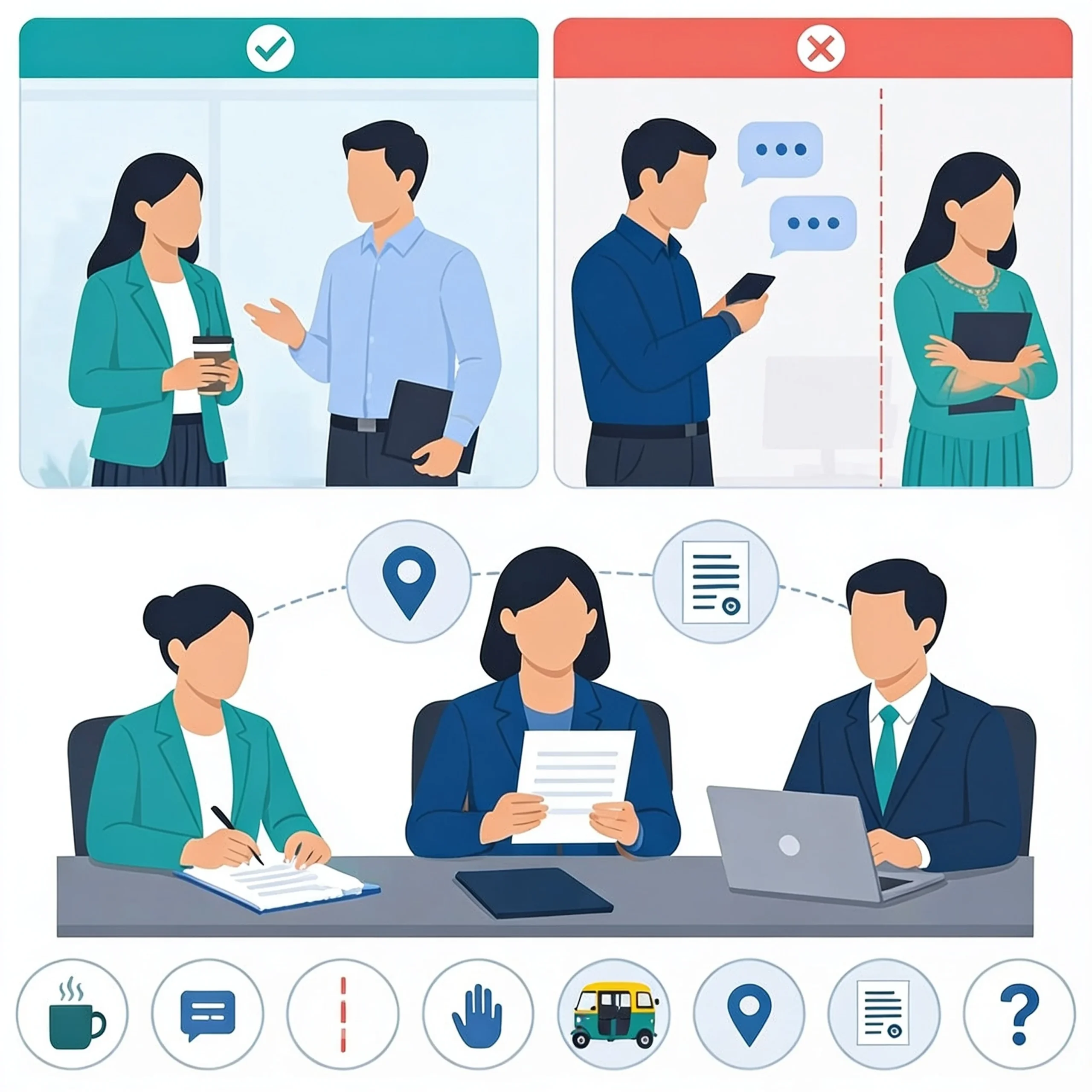
Many workplace interactions are warm, collaborative, and friendly. But where should we draw the line?
The POSH Act does not prohibit friendships at work; it prohibits unwelcome conduct of a sexual nature. The challenge arises when one person’s perception of friendliness is mistaken for mutual interest.
A colleague replying politely, accepting a coffee once, smiling during conversations, or being approachable does not imply consent to repeated personal messages, comments on appearance, or romantic advances.
When such behaviour continues despite visible discomfort or after boundaries have been expressed, it may amount to sexual harassment under the POSH Act.
The most important question is not “What did I mean?” but “How was my conduct received?”
Read the full blog on our website.
Case Law Corner
Is a Shared Auto a “Workplace” Under the POSH Act?
Case: Ayesha Khatun & Ors. v. State of West Bengal & Ors.
The Background
A woman employee filed a sexual harassment complaint alleging that the incident occurred while she and a colleague were travelling in a shared auto-rickshaw after work. The Internal Committee accepted the complaint, conducted an inquiry, and found the respondent guilty. The respondent challenged the findings before the High Court, arguing that the alleged incident had not occurred at a “workplace” under the POSH Act.
The Court’s View
The Court observed that although the POSH Act provides a broad definition of “workplace,” a shared public auto-rickshaw used independently by employees does not automatically qualify as one.
There must be a sufficient connection between the alleged incident and the employment or an employer-controlled environment.
Key Takeaways
- The definition of workplace is broad, but not unlimited.
- Employer-arranged transport may fall within the scope of the POSH Act.
- Public transport used independently by employees may not automatically be covered.
- Before commencing a detailed inquiry, the IC should conduct a preliminary jurisdiction check to determine whether the complaint falls within the scope of the POSH Act.
- A preliminary assessment can help ensure that complaints are handled under the appropriate legal framework while avoiding procedural challenges later.
Regulatory Watch
NCW’s POSH Advisory: The Shift from Compliance to Accountability
The National Commission for Women (NCW) has issued an 18-point advisory recommending stronger implementation of the POSH Act across India.
While the advisory is directed at State Governments and District Administrations, there are a few critical action points applicable to employer as well.
What Should Organizations Do?
- Review your Internal Committee composition.
- Ensure employees receive regular POSH awareness training.
- Train and upskill IC Members.
- Review your POSH Policy and complaint mechanisms.
- Conduct an internal POSH compliance audit.
- Verify that statutory reports and documentation are up to date.
Conduct periodic internal POSH reviews to identify and address compliance gaps before they become regulatory concerns.
Scenario of the Month
A Complaint After the Appraisal
Riya, a Senior Analyst, files a POSH complaint against her Reporting Manager.
She alleges that he repeatedly asked her to stay back after office hours for “career discussions,” commented on her appearance, suggested they meet outside work, and once placed his hand on her shoulder in a way that made her uncomfortable.
Riya says she did not object earlier because he controlled her appraisal rating.
The respondent denies the allegations and says the complaint was filed only after Riya received a poor performance appraisal.
There are no eyewitnesses, but calendar records show multiple late-evening meetings and messages requesting one-on-one meetings.
What should the IC do first?
- Dismiss the complaint because it followed the appraisal.
- Accept the complaint as true because he was her manager.
- Conduct a fair inquiry by evaluating the evidence, context, and workplace power dynamics.
- Close the matter because there are no eyewitnesses.
Correct Answer
The correct approach is to conduct a fair inquiry.
A delayed complaint, poor appraisal, or absence of eyewitnesses does not automatically make a complaint false. Similarly, a reporting relationship does not establish guilt. The IC should objectively assess all available evidence while ensuring fairness to both parties.
Workplace harassment cases often depend on the overall pattern of conduct rather than a single piece of evidence.
FAQ Corner
Upcoming Webinars
Free Webinar: POSH Compliance and Investigation
All You Need to Know About POSH Compliance
📅 23 July 2026 | 🕒 3:00 PM – 4:30 PM IST
A practical session covering:
- POSH compliance essentials
- Internal Committee constitution
- Employee awareness
- IC capacity building
- Annual reporting
- NCW Advisory
- Internal POSH audits
Who should attend?
- HR Professionals
- Compliance Teams
- Internal Committee Members
- Employers
- Business Leaders
POSH Webinar for Internal Committee Members
Navigating Consent, Power Dynamics & Compliance in Workplace Inquiries
📅 17 July 2026 | 🕒 3:00 PM – 4:30 PM IST
Learn how to conduct legally compliant inquiries involving:
- Consent
- Power dynamics
- Evidence evaluation
- Fair inquiry procedures
- Real-life case studies
Ideal for:
- Internal Committee Members
- Presiding Officers
- HR Professionals
- Compliance Teams
- Employers
News Round-up
NCW Recommends Annual POSH Audits
The NCW has advised States and Union Territories to strengthen implementation of the POSH Act through annual audits, stronger monitoring mechanisms, and better functioning Internal Committees.
High Court Clarifies Scope of “Workplace”
A recent High Court judgment held that a shared public auto-rickshaw does not automatically qualify as a workplace under the POSH Act, reinforcing the need for ICs to first assess jurisdiction before proceeding with an inquiry.
Due Process Before Compensation
The Madhya Pradesh High Court recently held that compensation should not be awarded while an appeal against the inquiry findings is still pending, highlighting the importance of completing the legal process before determining compensation.
Have a POSH Question?
Our experts answer practical questions from HR professionals and Internal Committee Members every month.
Send your questions to: contact@eLearnPOSH.com
Leave a Reply