

• Skip to primary navigation
  • Skip to main content
eLearnPOSH

eLearnPOSH

Best training on POSH

  • POSH Courses

    • POSH Training for Employees
    • POSH Training for Managers
    • POSH Training for IC Members
    • POSH Training for Higher Educational Institutions
    • POCSO - Prevention of Child Sexual Abuse

    Global Courses

    • Unconscious Bias
    • Equality, Diversity & Inclusion
    • Sexual Harassment Prevention for US

    Important Resources

    • Free POSH Audit
    • Complaint Management System
    • SHe-Box
    • About Us
    • FAQ
  • POSH Act
  • External Members Directory
  • Our Webinars
  • Resources

    • Blog
    • Newsletter
    • Media
    • Enterprise Features
sales@succeedtech.com
+91 70190 12446
Contact Us
Home > Newsletter > Staying Ahead in Workplace Safety & Compliance

Staying Ahead in Workplace Safety & Compliance

July 9, 2026 8 min read 📧 Subscribe to our Newsletter

Staying Ahead in Workplace Safety & Compliance 1

1.Editorial

2.POSH in Focus

3.Scenario of the Month

4.FAQ Corner

5.Upcoming Webinars

6.News Round-up

7.Have a POSH Question?

Editorial

Ms. Maya Sreenivasan

Ms. Maya Sreenivasan

Psychologist,
Subject Matter Expert at eLearnPOSH.com
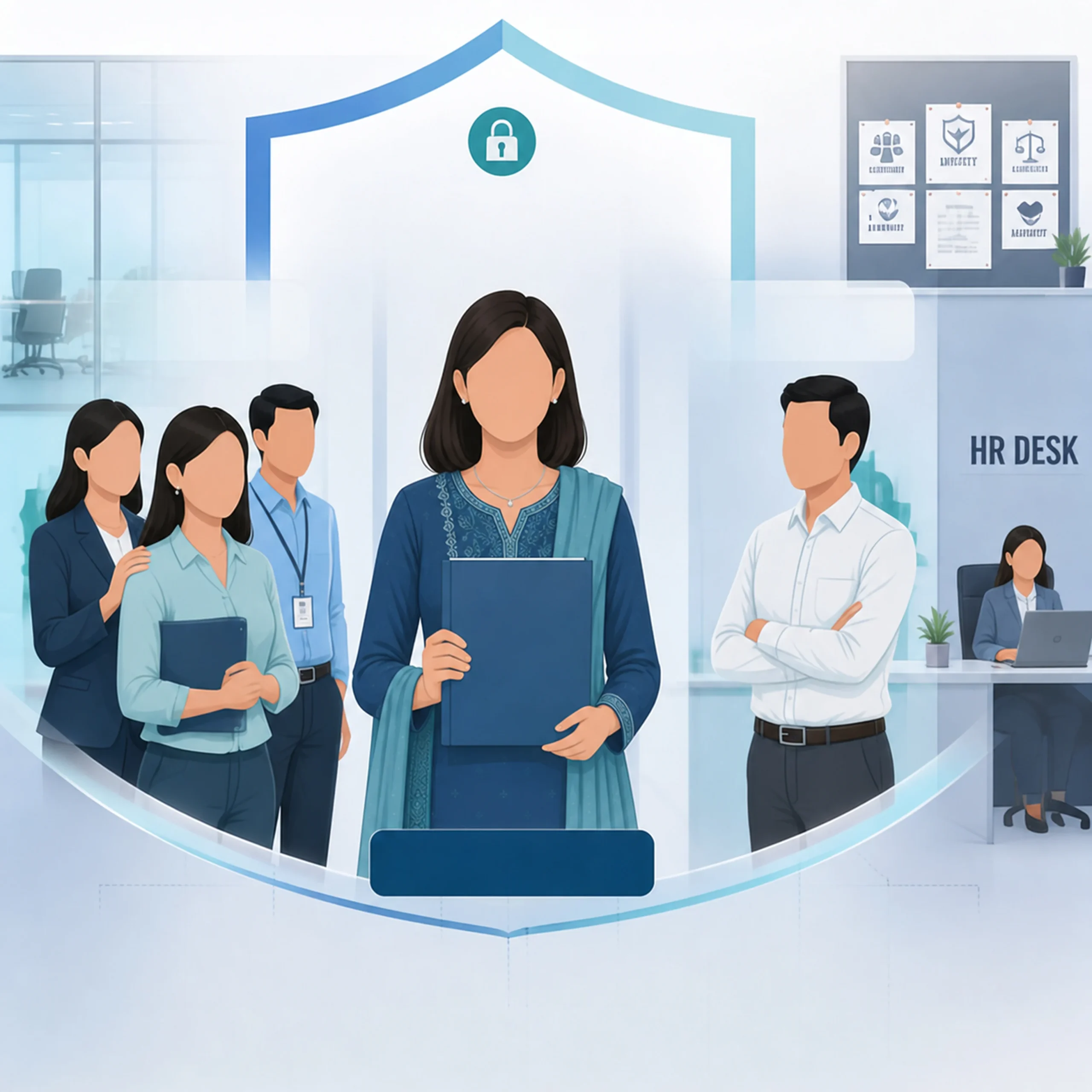
POSH Compliance Updates highlighting workplace harassment case law developments and legal interpretations under the POSH ActRetaliation Prevention Must Begin on Day One

A POSH complaint does not end with receiving the complaint or starting the inquiry. In many cases, the most sensitive phase begins immediately after a concern is raised.

This is the stage where retaliation, intimidation, gossip, exclusion, subtle pressure, or premature judgment can quietly affect the fairness of the process. Retaliation may not always appear in formal HR records. It may show up in meeting invites, project allocation, appraisal comments, reporting relationships, informal conversations, or team behaviour.

That is why retaliation prevention must begin from day one.

Organizations should clearly communicate to both parties that retaliation, intimidation, pressure, gossip, or adverse treatment will not be tolerated. Managers should also be given clear boundaries, even if they are not given confidential details of the complaint. They must understand that exclusion, work-related disadvantage, or speculation can create fresh risk for the organization.

At the same time, fairness must protect both sides. The complainant should not suffer for speaking up, and the respondent should not be punished before the inquiry is complete.

A fair POSH process is not only about reaching the right finding. It is also about protecting the integrity of the workplace while the process is underway.

POSH in Focus

Latest POSH Compliance Updates July 2026

POSH Compliance Updates covering NCW advisories, Internal Committee responsibilities, and workplace compliance requirements

POSH Compliance Updates July 2026 provide HR professionals, employers, and Internal Committee members with the latest workplace harassment prevention guidance, case law developments, regulatory updates, and practical compliance insights under the POSH Act.

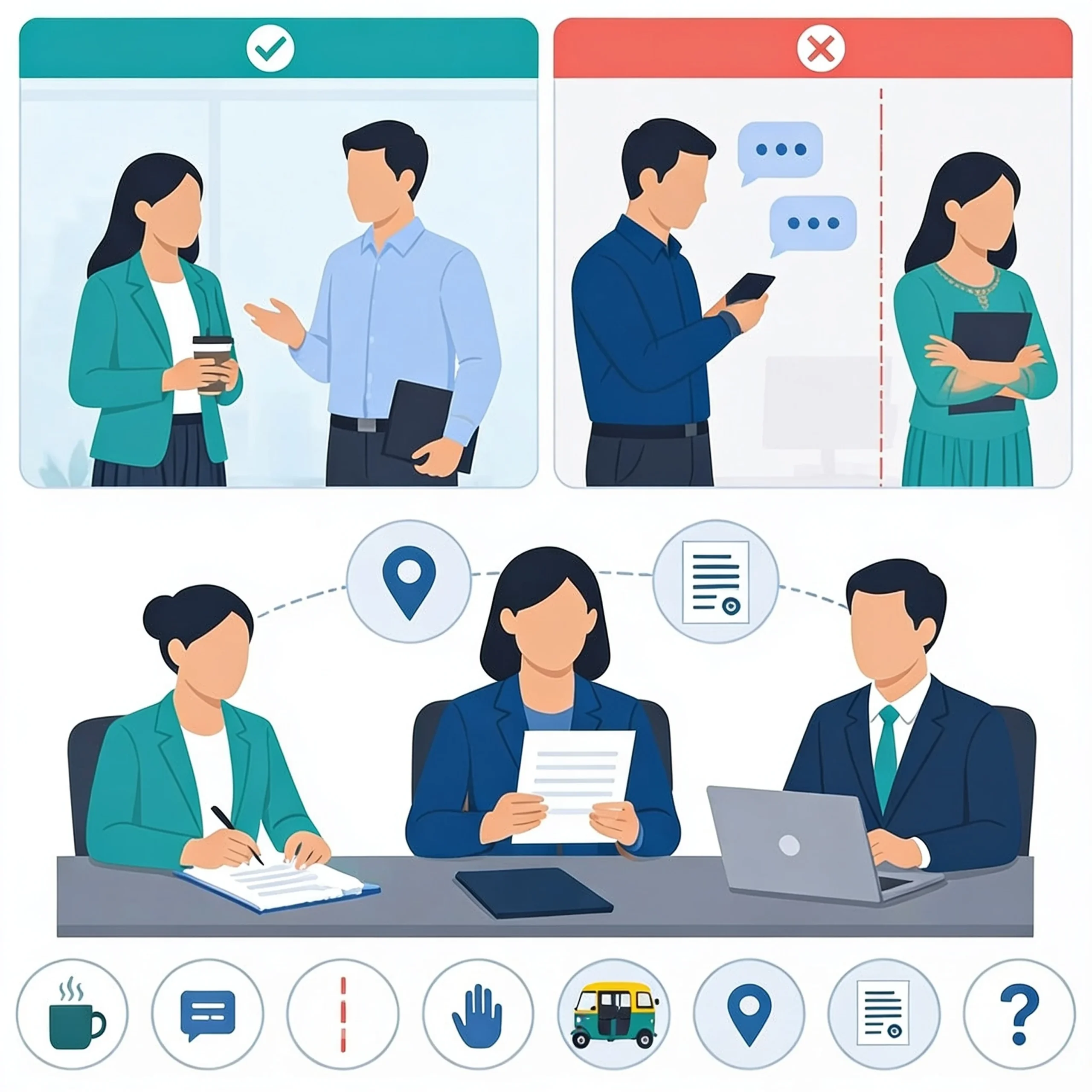
Many workplace interactions are warm, collaborative, and friendly. But where should we draw the line?

The POSH Act does not prohibit friendships at work; it prohibits unwelcome conduct of a sexual nature. The challenge arises when one person’s perception of friendliness is mistaken for mutual interest.

A colleague replying politely, accepting a coffee once, smiling during conversations, or being approachable does not imply consent to repeated personal messages, comments on appearance, or romantic advances.

When such behaviour continues despite visible discomfort or after boundaries have been expressed, it may amount to sexual harassment under the POSH Act.

The most important question is not “What did I mean?” but “How was my conduct received?”

Read the full blog on our website.

POSH compliance risks and workplace harassment prevention guidance for HR teams in 2026

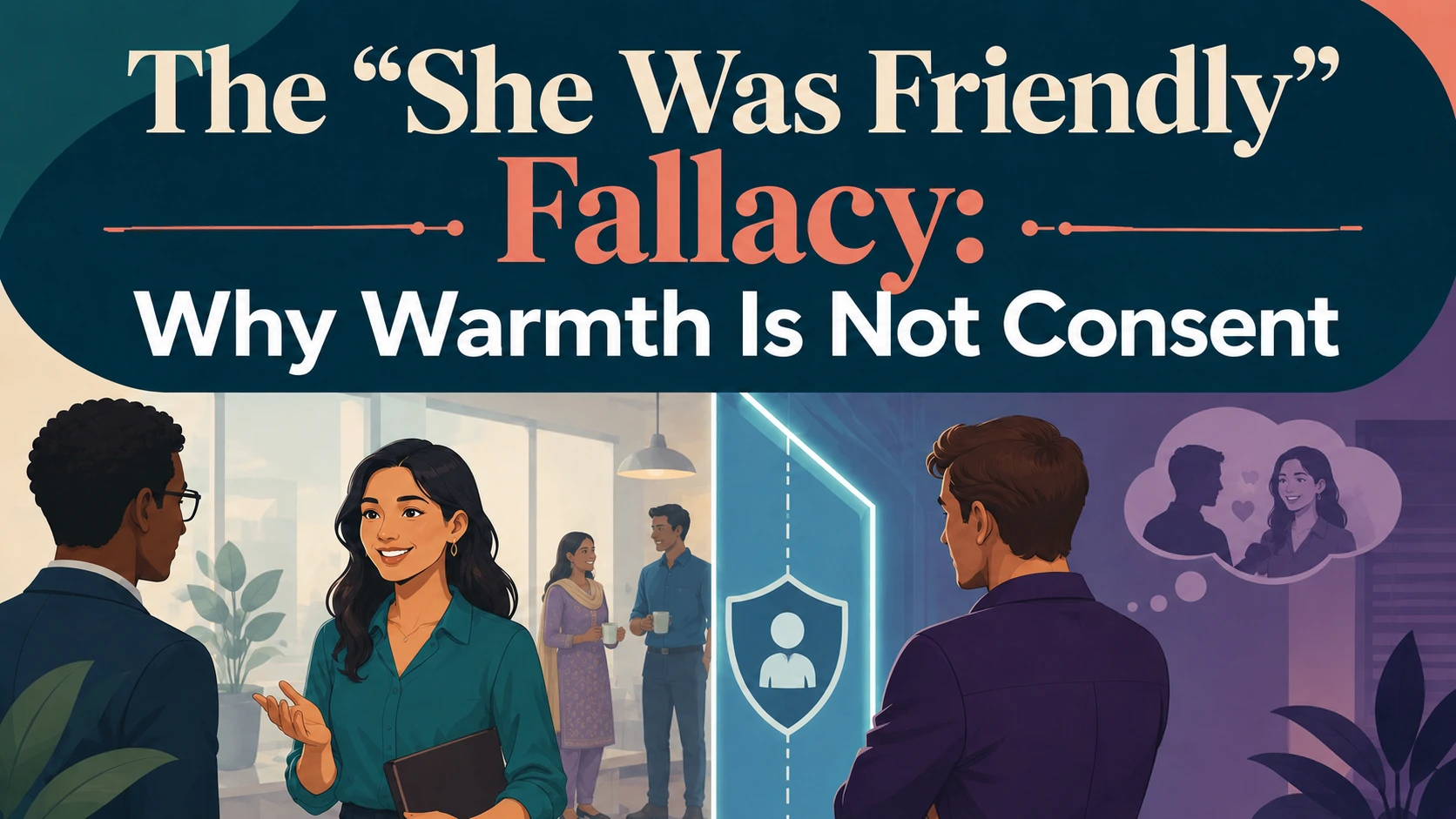
The “She Was Friendly” Fallacy: Why Warmth Is Not Consent

Introduction: The Dangerous Misreading of Ordinary Warmth

“She was friendly with me.”

This sentence may sound casual, but in workplace harassment conversations, it can become deeply dangerous.

Know More

Case Law Corner

Is a Shared Auto a “Workplace” Under the POSH Act?

Case: Ayesha Khatun & Ors. v. State of West Bengal & Ors.

The Background

A woman employee filed a sexual harassment complaint alleging that the incident occurred while she and a colleague were travelling in a shared auto-rickshaw after work. The Internal Committee accepted the complaint, conducted an inquiry, and found the respondent guilty. The respondent challenged the findings before the High Court, arguing that the alleged incident had not occurred at a “workplace” under the POSH Act.

The Court’s View

The Court observed that although the POSH Act provides a broad definition of “workplace,” a shared public auto-rickshaw used independently by employees does not automatically qualify as one.

There must be a sufficient connection between the alleged incident and the employment or an employer-controlled environment.

Key Takeaways

  • The definition of workplace is broad, but not unlimited.
  • Employer-arranged transport may fall within the scope of the POSH Act.
  • Public transport used independently by employees may not automatically be covered.
  • Before commencing a detailed inquiry, the IC should conduct a preliminary jurisdiction check to determine whether the complaint falls within the scope of the POSH Act.
  • A preliminary assessment can help ensure that complaints are handled under the appropriate legal framework while avoiding procedural challenges later.

Regulatory Watch

NCW’s POSH Advisory: The Shift from Compliance to Accountability

The National Commission for Women (NCW) has issued an 18-point advisory recommending stronger implementation of the POSH Act across India.

While the advisory is directed at State Governments and District Administrations, there are a few critical action points applicable to employer as well.

What Should Organizations Do?

  • Review your Internal Committee composition.
  • Ensure employees receive regular POSH awareness training.
  • Train and upskill IC Members.
  • Review your POSH Policy and complaint mechanisms.
  • Conduct an internal POSH compliance audit.
  • Verify that statutory reports and documentation are up to date.

Conduct periodic internal POSH reviews to identify and address compliance gaps before they become regulatory concerns.

Scenario of the Month

A Complaint After the Appraisal

Riya, a Senior Analyst, files a POSH complaint against her Reporting Manager.

She alleges that he repeatedly asked her to stay back after office hours for “career discussions,” commented on her appearance, suggested they meet outside work, and once placed his hand on her shoulder in a way that made her uncomfortable.

Riya says she did not object earlier because he controlled her appraisal rating.

The respondent denies the allegations and says the complaint was filed only after Riya received a poor performance appraisal.

There are no eyewitnesses, but calendar records show multiple late-evening meetings and messages requesting one-on-one meetings.

What should the IC do first?

  • Dismiss the complaint because it followed the appraisal.
  • Accept the complaint as true because he was her manager.
  • Conduct a fair inquiry by evaluating the evidence, context, and workplace power dynamics.
  • Close the matter because there are no eyewitnesses.

Correct Answer

The correct approach is to conduct a fair inquiry.

A delayed complaint, poor appraisal, or absence of eyewitnesses does not automatically make a complaint false. Similarly, a reporting relationship does not establish guilt. The IC should objectively assess all available evidence while ensuring fairness to both parties.

Workplace harassment cases often depend on the overall pattern of conduct rather than a single piece of evidence.

FAQ Corner

1. How often should the Internal Committee conduct meetings?

The POSH Act does not prescribe a fixed frequency for regular IC meetings. However, as a good governance practice, the IC should meet once every quarter, even when there are no active complaints.  

The DoPT Office Memorandum dated 2 February 2015 also recommends quarterly meetings to ensure that Complaints Committees remain prepared, effective, and functional.independently and objectively, even if the events are connected. The committee may hear both matters together for factual clarity, but the assessment of each complaint should remain distinct. 

These meetings may be used to review the legality of IC constitution, the frequency of awareness programmes, training status, policy updates, pending action items from the previous meetings, annual reporting readiness and overall POSH compliance. 
Complaint-related meetings should be conducted separately whenever required.  

2. Can IC proceedings continue if a police complaint has already been filed?

Yes.

A complaint filed with the police or any other authority does not prevent the Internal Committee from accepting and inquiring into the complaint.

Both proceedings can continue simultaneously because they serve different purposes. Police proceedings address criminal offences, while IC proceedings address workplace redressal under the POSH Act and the organization’s POSH Policy.

The IC should continue to follow due process, maintain confidentiality, adhere to statutory timelines, and arrive at its own findings.

If the police contacts the organization, cooperate with the police in their inquiry.

Upcoming Webinars

Free Webinar: POSH Compliance and Investigation

All You Need to Know About POSH Compliance

📅 23 July 2026 | 🕒 3:00 PM – 4:30 PM IST

A practical session covering:
  • POSH compliance essentials
  • Internal Committee constitution
  • Employee awareness
  • IC capacity building
  • Annual reporting
  • NCW Advisory
  • Internal POSH audits
Who should attend?
  • HR Professionals
  • Compliance Teams
  • Internal Committee Members
  • Employers
  • Business Leaders

POSH Webinar for Internal Committee Members

Navigating Consent, Power Dynamics & Compliance in Workplace Inquiries

📅 17 July 2026 | 🕒 3:00 PM – 4:30 PM IST

Learn how to conduct legally compliant inquiries involving:
  • Consent
  • Power dynamics
  • Evidence evaluation
  • Fair inquiry procedures
  • Real-life case studies

Ideal for:

  • Internal Committee Members
  • Presiding Officers
  • HR Professionals
  • Compliance Teams
  • Employers

News Round-up

NCW Recommends Annual POSH Audits

POSH Compliance Updates explaining workplace harassment scenarios, evidence evaluation, and Internal Committee inquiry practices

The NCW has advised States and Union Territories to strengthen implementation of the POSH Act through annual audits, stronger monitoring mechanisms, and better functioning Internal Committees.

High Court Clarifies Scope of “Workplace”

A recent High Court judgment held that a shared public auto-rickshaw does not automatically qualify as a workplace under the POSH Act, reinforcing the need for ICs to first assess jurisdiction before proceeding with an inquiry.

Due Process Before Compensation

The Madhya Pradesh High Court recently held that compensation should not be awarded while an appeal against the inquiry findings is still pending, highlighting the importance of completing the legal process before determining compensation.

Have a POSH Question?

Our experts answer practical questions from HR professionals and Internal Committee Members every month.

Send your questions to: contact@eLearnPOSH.com
Subscribe to Our Newsletter

Categories
Newsletter POSH Act POSH Compliance POSH Training Ultimate Guide

Recent Newsletters

Beyond the Boardroom: POSH, Power and the Expanding Meaning of Workplace Safety
June 9, 2026

Beyond the Boardroom: POSH, Power and the Expanding Meaning of Workplace Safety

1. Editorial  2. POSH Beyond the Corporate Lens: Sports, Power and Institutional Accountability 3. The Grey Zone in Everyday Workplace Behaviour 4.…

18 min read Read More
POSH Compliance Risks 2026 for HR Teams: Essential Guide
May 8, 2026

POSH Compliance Risks 2026 for HR Teams: Essential Guide

1. From the Editor’s Desk 2. Judgement Analysis: Due Process is Non-Negotiable 3. Case Spotlight: When Inaction Becomes Risk (TCS Nashik) 4.…

21 min read Read More
POSH Compliance Checklist: What HR Must Review in 2026
April 16, 2026

POSH Compliance Checklist: What HR Must Review in 2026

1. From the Editor’s Desk 2. POSH Compliance Made Simple (2026) 3. What does Relevance in POSH Compliance Mean? 4. Is Your…

18 min read Read More
eLearnPOSH Monthly Digest (March 2026 Edition)
March 13, 2026

eLearnPOSH Monthly Digest (March 2026 Edition)

  From the Editor’s Desk Recent POSH Compliance Developments Every Employer Should Know Case Law Corner FAQ of the Month Guest Article…

10 min read Read More
View all
Share on:

Disclaimer: The content provided on elearnposh.com website like data, judgments, and opinions are only for informational / educational purposes in a general context. The content do not constitute legal advice and are not a substitute for legal advice for a specific case where the facts of the case are not known. You should seek legal advice or other professional advice in relation to any particular matters you or your organisation may have.

Reader Interactions

Leave a Reply Cancel reply

Your email address will not be published. Required fields are marked *

← Back to Newsletter Archive

Get in Touch With Us

Protected by reCAPTCHA

Contact Details

  • 📧 sales@succeedtech.com
  • 📱 +91-70190 12446
  • 📱 +91-70190 12446
  • 📱 +91-84318 10625
ISO 27001 Information Security Management System Certified GDPR Compliant AICPA SOC for Service Organizations

Solutions

  • POSH Courses
  • POSH Training for Employees
  • POSH Training for Managers
  • POSH Training for IC Members
  • POSH Training for Higher Educational Institutions
  • POCSO - Prevention of Child Sexual Abuse
  • Global Courses
  • Unconscious Bias
  • Equality, Diversity & Inclusion
  • Sexual Harassment Prevention for US

Get Social With Us

Ariba Network

Subscribe to our newsletter

Copyright © 2024 eLearnPOSH.com Powered By Succeed Technologies®

  • Terms and Conditions
  • Privacy Policy
  • FAQs
  • Sitemap
This website uses cookies to improve your experience.
ACCEPT Privacy Policy
Privacy & Cookies Policy

Privacy Overview

This website uses cookies to improve your experience while you navigate through the website. Out of these cookies, the cookies that are categorized as necessary are stored on your browser as they are essential for the working of basic functionalities of the website. We also use third-party cookies that help us analyze and understand how you use this website. These cookies will be stored in your browser only with your consent. You also have the option to opt-out of these cookies. But opting out of some of these cookies may have an effect on your browsing experience.
Necessary
Always Enabled
Necessary cookies are absolutely essential for the website to function properly. This category only includes cookies that ensures basic functionalities and security features of the website. These cookies do not store any personal information.
Functional
Functional cookies help to perform certain functionalities like sharing the content of the website on social media platforms, collect feedbacks, and other third-party features.
Performance
Performance cookies are used to understand and analyze the key performance indexes of the website which helps in delivering a better user experience for the visitors.
Analytics
Analytical cookies are used to understand how visitors interact with the website. These cookies help provide information on metrics the number of visitors, bounce rate, traffic source, etc.
Advertisement
Advertisement cookies are used to provide visitors with relevant ads and marketing campaigns. These cookies track visitors across websites and collect information to provide customized ads.
Others
Other uncategorized cookies are those that are being analyzed and have not been classified into a category as yet.
SAVE & ACCEPT

View all results