


The “She Was Friendly” Fallacy: Why Warmth Is Not Consent
Introduction: The Dangerous Misreading of Ordinary Warmth The Core Mistake: Confusing Social Access With Sexual Consent What the POSH Law Actually Looks…

eLearnPOSH
Best training on POSH
Sexual harassment is a serious problem in organizations. With the increase in the representation of women in organizations, there is an increase in assault against them as well.
With the #Metoo movement when many women opened up about their horrible experiences, we started understanding the depth of this issue. Yes, women can open up and fight legally. But that’s not an easy task.
As a relief to this, came the enactment of Sexual Harassment of Women at Workplace (Prevention, Prohibition and Redressal) (POSH) Act in 2013. The Act opens a new way for organizations to handle sexual harassment complaints: through the Internal Committee. Let’s see how an organization’s Internal Committee can assist women in fighting against sexual harassment at workplace and towards creating a harassment-free environment.
The POSH Act 2013 mandates that an organization has to implement a few measures to stay compliant to the Act. Any organization with ten or more employees should constitute an Internal Committee (IC) or Internal Complaints Committee (ICC) by an order in writing. The IC will investigate the complaints regarding sexual harassment and redress them. If the organization has multiple administrative divisions in different locations, an IC has to be constituted in each administrative division.
Remember that the term employee according to the Act refers to anybody employed by the organization on a temporary, ad hoc or daily wage basis, and includes apprentices, trainees, volunteers and those employed through an agent or contractor.
Sexual Harassment at the workplace is a very sensitive issue and needs to be handled with care, patience and understanding. It is important that the complaints must be redressed as quick as possible to provide a harmonious and harassment-free workplace for all employees. Hence, constituting an IC sends a strong message that the organization is committed to women’s safety. Additionally, this is legally mandatory and not abiding can attract heavy fines including cancellation of licence to do business.
The IC constituted by the organization is authorized to do the following:
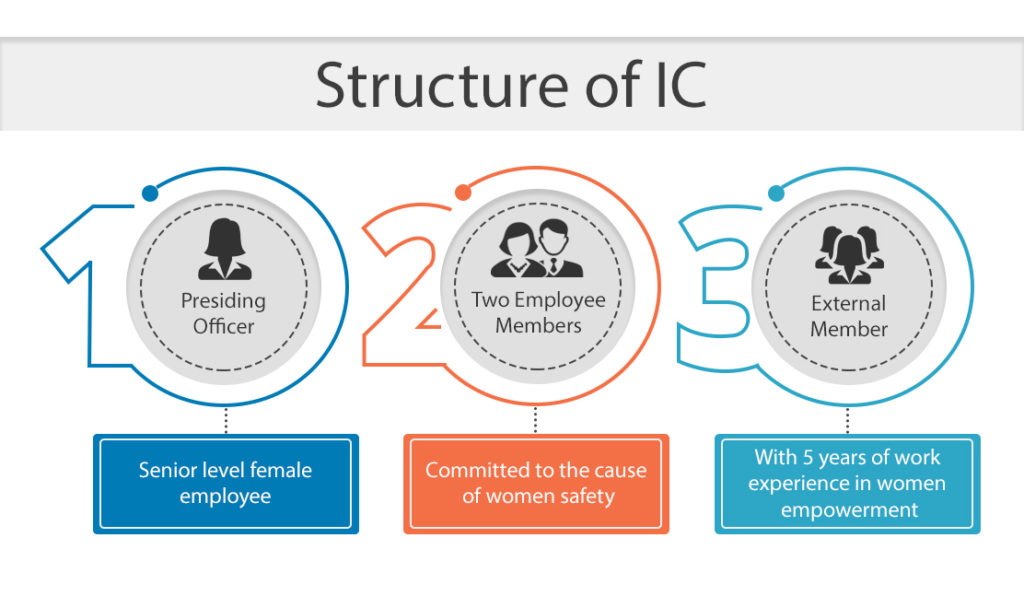 Number of members in the Internal Committee (IC) / Internal Complaints Committee (ICC)
An IC constituted by the employer should have a minimum of four members including an external member. One-half of the IC members should be women.
Following are the three types of members IC has:
The idea of an external member is a little tricky to understand. The following section can be helpful in clearing the confusions.
The point of having an external member is to ensure that the activities of the IC are unbiased and uninfluenced, and inquiry process is neutral and transparent.
Here is a list of the responsibilities of an External Member in the Internal Committee.
The POSH law allows External Member to accept an allowance and reimbursement of the travel cost from the employer. Additionally, the Act also allows a person to act as an External Member of more than one organisation.
If you are looking for an External Member for your Internal Committee, you can check our FREE External Member Directory which has a collection of External Member profiles. If you are an External Member and would like to add your profile to our External Member Directory, you can do it for FREE here.
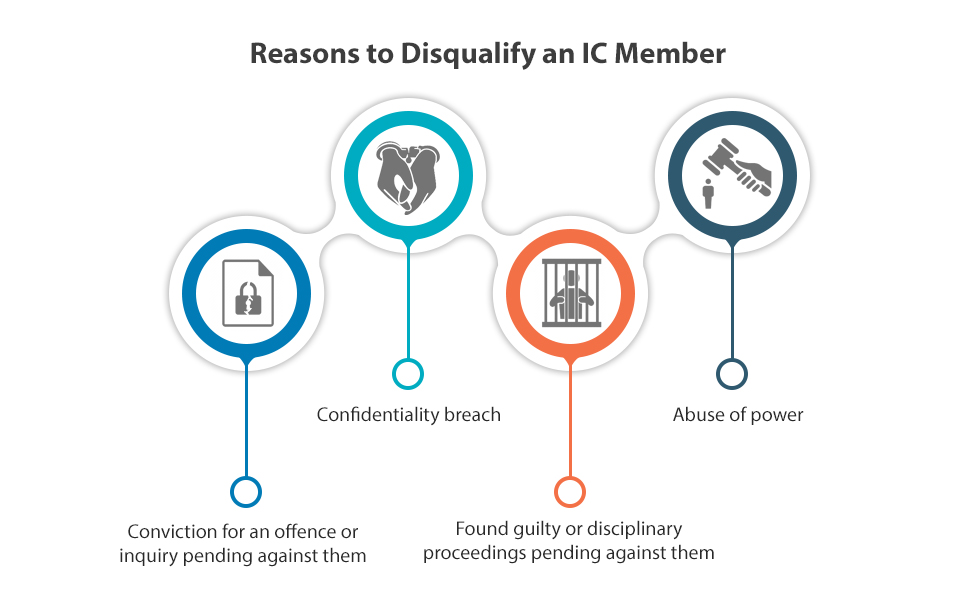
The term of an IC member is three years from the date of appointment after which she/he must be replaced. However, an IC member can be removed from the position within three years if the he/she
In such case, the member must step down and the position must be filled with an individual who possesses the qualification to be in the position.
Click here to watch our videos on POSH.
It is the responsibility of the IC to conduct neutral investigations into the cases of sexual harassment and redress appropriately within the timeline. Questions can arise about the validity and objectivity of the verdicts if the IC is not constituted according to the POSH law. There can be severe legal implications too. There have been instances when the court dissolved an IC which was not formed according to the Act. Court can even recommend reinvestigations into cases by a newly formed IC. In addition, the Act says that non-compliance can attract heavy penalties like:
Let’s get into the working of the IC in detail. We will begin with understanding the terms complainant and respondent from the which will appear several times hereafter.
Complainant: Any woman who files a complaint of sexual harassment against an employee of your organization is a complainant. It is not necessary that the complainant must be from your organization. A complainant can be anyone like employee, partner, visitor, intern, etc.
Respondent: The person against whom the complaint is charged is a respondent.
The IC can look into a complaint only if the respondent is an employee of the organization, for example, peers, managers, interns, contract workers and consultants. If the complaint is against an Employee of some other organisation or outsider/third party, other mechanisms must be applied as per the POSH law.
POSH Act provides that both the parties involved, the complainant and the respondent, must be given a fair opportunity to present their side of the story, and the respondent should be allowed to cross-examine the witnesses involved in the sexual harassment case.
POSH Act mandates that while the inquiry happens, the Internal Committee (IC) members must adhere to the ‘Principles of Natural Justice’. Since the POSH Act does not define or explain the term “Principles of Natural Justice”, it is very difficult to draw a boundary for it. Therefore, the application of the principles of natural justice would depend on the context and the situation the IC Members are faced with.
Having said that, there are common and agreed upon tenets for “Principles of Natural Justice”. Let’s have a quick look at them.
The honorable Supreme Court of India has associated Article 21 of the Indian Constitution that speaks about “Right to personal liberty” with “Principles of Natural Justice”. There are several judgments where the honorable Supreme Court has emphatically asserted that the procedure of investigation must satisfy the conditions of fairness and reasonableness. Any investigation process that falls beyond the ambit of fairness and reasonableness will be considered to have violated the Principles of Natural Justice.
IC should investigate any written complaint of sexual harassment received from a complainant against any employee of the organization. The IC should ensure that six copies of the complaint along with supporting documents (if any) and list of witness are given. The complainant can hand over the complaint to any of the IC members which has to be forwarded to the Presiding Officer within 3 days of the receival.
IC can intervene if the said incident has happened not only in the office building or office premises but also
Hence, in case if any sexual harassment takes place during office picnics, offsite visit, farewell party, conferences or through mediums such as WhatsApp, email or SMS – such incidents too shall be considered an incident of sexual harassment at the workplace.
The IC can inquire into complaints only if a woman files a case in writing within 3 months from the date of occurrence of the incident. In case of multiple incidents, then the complaint can be filed with the IC within 3 months from the date of the last incident of sexual harassment. If the complainant has been unable to file the complaint within 3 months, the IC upon its discretion may extend the time limit by a further period of 3 months.
If the aggrieved is unable to file a complaint due to physical or mental incapacity, a complaint can be filed by her legal heir or any person apt with the written consent of the aggrieved woman.
The complaint received from the complainant has to be shared with respondent within 7 working days of receipt. Following this, the respondent has to respond within 10 working days from the date on which they received the copy of the complaint.
After the complaint is received it is time for the IC to get to finish inquiry and redress the issue. The POSH Act mandates that the IC must complete the inquiry within 90 days. Before going into an investigation, the IC can attempt to settle the matter between the complainant and respondent. The following needs to be kept in mind with respect to conciliation:
If Complainant feels that the terms of Settlement are not being complied with by the Respondent or action has not been taken by the organisation, Complainant can make a written request to the IC to conduct an inquiry into the complaint.
If the complainant is not interested in conciliation or the complainant claims that any term or condition of the settlement arrived during conciliation has not been complied with by the respondent, the IC should initiate an inquiry into the complaint. The Presiding Officer shall convene the first hearing of the inquiry.
During the inquiry, the IC has the same powers as that of a civil court with respect to the following:
The IC has to conduct examination and cross-examination of parties and witnesses as per the POSH law so that principles of natural justice can be followed. In case the complainant or the respondent wishes to cross-examine the witnesses, they can do so in the form of written questions and responses via IC. Neither parties can directly cross-examine the witnesses.
Note that all proceedings of the IC should be documented and endorsed by the two parties and IC members.
At any point during the inquiry, the IC shall have the right to terminate the inquiry proceedings if the complainant fails to appear, or to give an ex-parte decision if the respondent fails to appear without sufficient cause, for 3 (three) consecutive hearings convened by the Presiding Officer. Such termination or ex-parte order should be passed only after giving a notice in writing, 15 (fifteen) days in advance, to the Complainant or Respondent as the case may be.
If the complainant feels unsafe during the inquiry, she can bring this to the notice of the IC in writing, which may then recommend to the employer one of the following based on the severity of the case:
The employer will then have to implement the recommendations made and send a report of the same to the IC.
With the changing workplace dynamics and improving technological support, working remotely have become as common as working from a physical workplace. A concern that may arise because of this shift in the concept of workplace is conducting inquiries online. Click here to know how you can ensure effective inquiry completion in the remote work scenario.
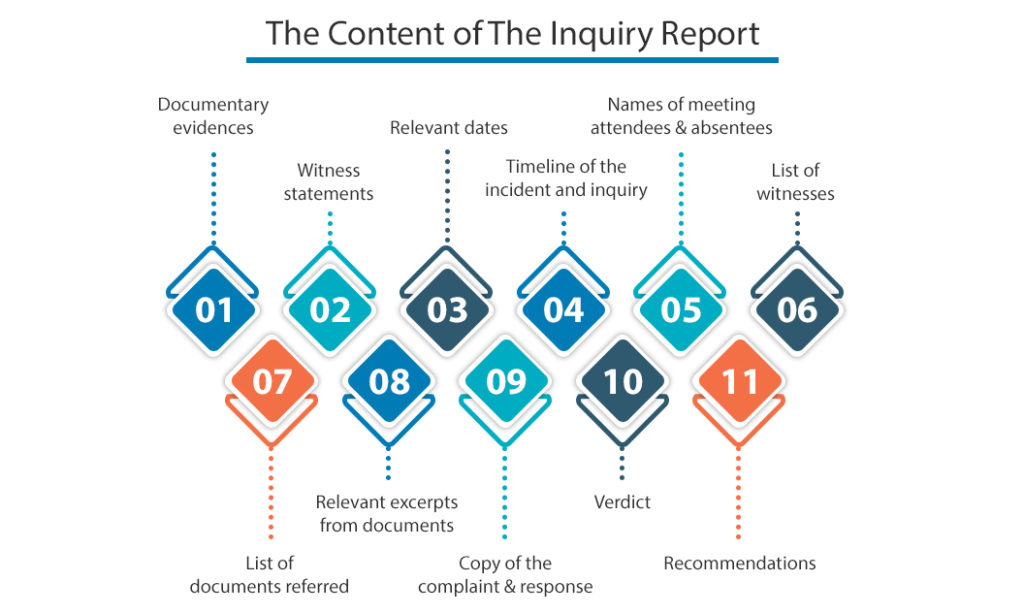
Once the inquiry is complete, the IC must prepare an inquiry report and submit it to the complainant, respondent and management within 10 days from the completion of inquiry. The report should be based on facts, circumstances, documentary evidence presented and witness statements. Mention all relevant dates, dates to show how the timeline was followed, details of who attended the meetings, who were absent, list of witnesses, list of documents referred, important relevant excerpts from documents, witness statements, a copy of the complaint and the response while giving your reasons. Finally, make recommendations which are in line with the law & service rules and proportionate to the degree of guilt proved.
The report will state whether the respondent is guilty, or the complaint was false or malicious and contain recommendations as the next step. The recommendations can include the following:
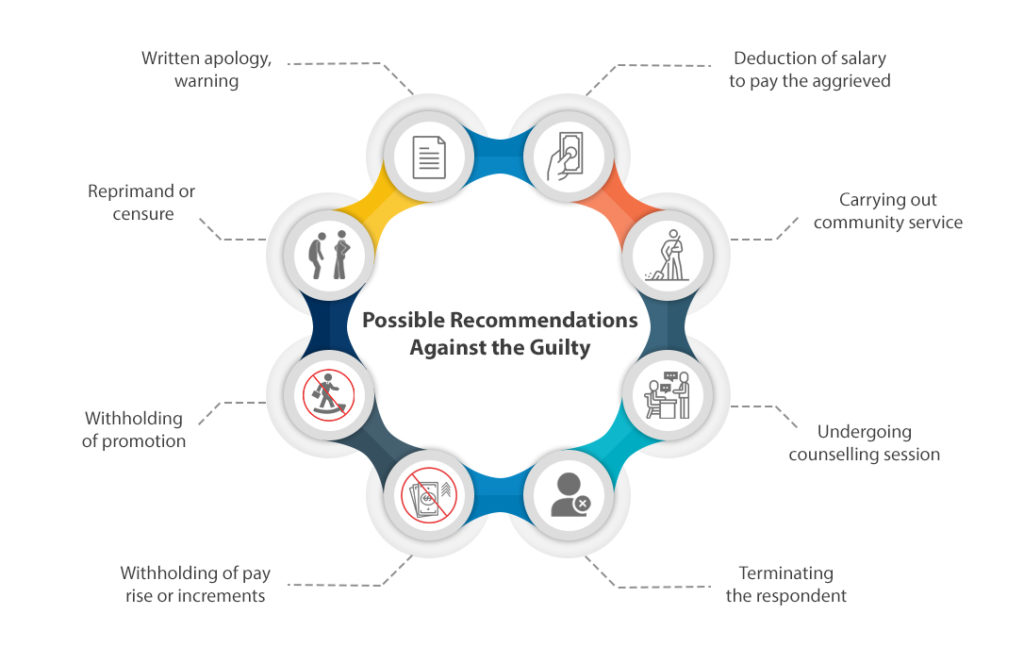 The IC can also recommend deducting appropriate sum from the salary or wages of the respondent to be paid to the aggrieved woman or her legal heirs. If due to some reason the employer is unable to make such deductions, IC may ask the respondent to pay the same directly to the aggrieved woman. If the respondent fails to pay the sum, the IC can mark this as an ‘Arrear of land revenue’ which will then be dealt as per the Revenue Recovery Act, 1890 by the concerned District Officer. The sum to be paid is determined based on the following:
If the complaint is malicious, the same recommendations can be made against the complainant. Whether a complaint is malicious or not, inability to substantiate a complaint does not make it malicious. Malicious intent must be determined only after an inquiry.
Once the inquiry report is submitted, the organisation has to take necessary actions within 60 days.
Before we conclude, a few points to keep in mind to ensure that the inquiry is fair, and the report submitted is fool proof.
Being an IC member is a role of crucial responsibility because they are important in maintaining the safety and reputation of the organization. One of the major challenges for organizations is the inability of IC members to handle complaints effectively. An employee of an MNC committing suicide after being accused of sexual harassment was a hot news for a long time. The incident led to serious consequences for the IC and the company. This incident shows how a poorly trained IC can be costly for an organization and its employees.
There can also be tricky cases which the Internal Committee sweat over as it does not know how to handle them. Even studies suggest that many internal committee members lack the adequate training required to handle sexual harassment complaints effectively. It is important for the IC members to be thorough about the relevant laws and legal terms like workplace, employee, etc; the psychological impact of being a victim, or being accused; the process of conducting a fair investigation; dilemmas that can occur during investigations and many more. Frequent training is crucial for the empowerment of the IC. Do have a look at our comprehensive, interactive and engaging eLearning training for IC members.
It is true that you can avoid penalties and legal consequences if the IC is constituted correctly. But IC has got a lot more to do in an organization. They are responsible for creating a supportive work environment through training programs and awareness building initiatives. IC should act as the pillar and a driving force towards creating a respectful workplace by being role models themselves.
Check our latest Tools and Resources for IC members built to ease and automate the compliance process.
For more updates on POSH, kindly follow our LinkedIn page.
To book a personalized demo call directly with the Subject Matter Expert, you can write to sales@succeedtech.com
Introduction: The Dangerous Misreading of Ordinary Warmth The Core Mistake: Confusing Social Access With Sexual Consent What the POSH Law Actually Looks…

1. Why synthetic sexual content belongs in the POSH conversation 2. Weather workplace have moved beyond office premises? How does this affects…
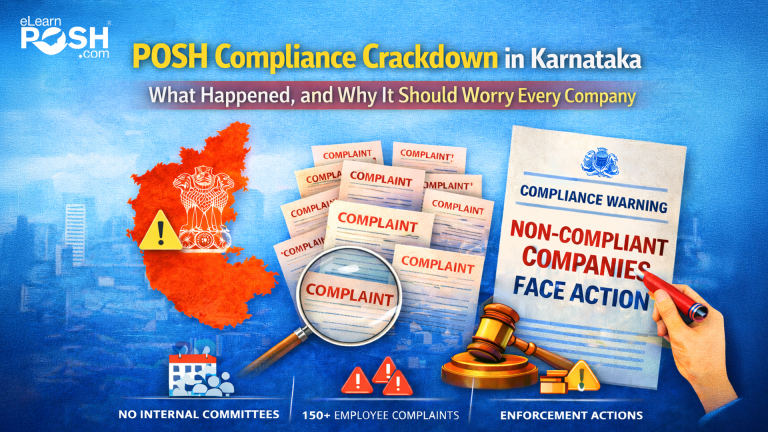
1. What Triggered the Karnataka POSH Crackdown? 2. The Legal Position Was Always Clear 3. The Gap Between Compliance and Functioning…
1. The Shift from POSH Compliance to Real Workplace Effectiveness 2. How SHe-Box Is Changing Workplace Harassment Reporting in India 3. Understanding…
Leave a Reply